
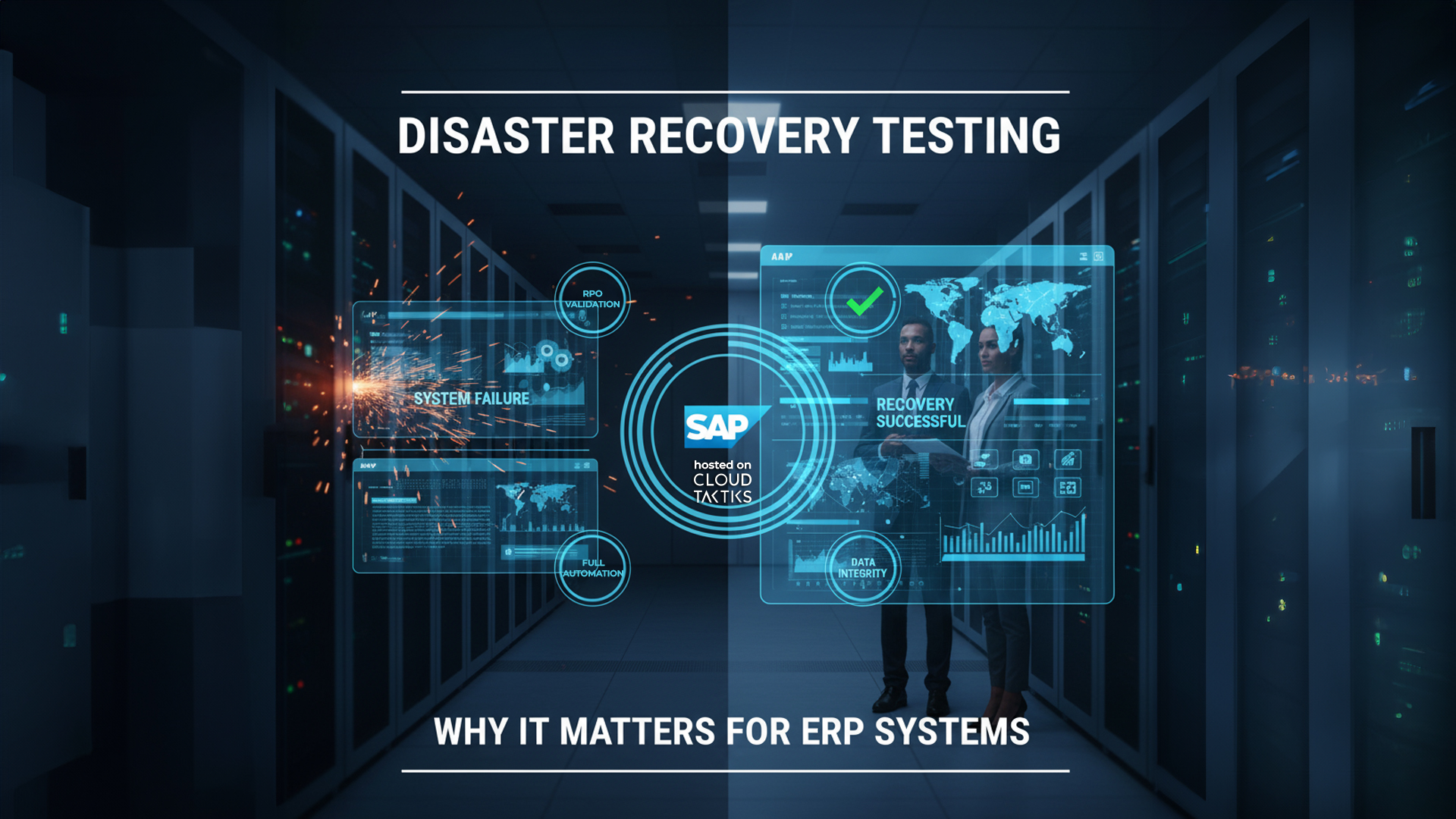
Every company knows the importance of backing up data but few truly understand the difference between having backups and being able to recover from a disaster. For ERP systems like SAP Business One, disaster recovery (DR) testing is the only way to guarantee business continuity when things go wrong.
Disaster recovery testing simulates real-world crises hardware failures, ransomware attacks, power outages to confirm your system can be restored quickly and completely. Without these tests, even the best-designed backup strategy may fail when you need it most.
The first goal of DR testing is to validate your Recovery Point Objective (RPO) how much data your business can afford to lose and your Recovery Time Objective (RTO) how fast you can restore operations. These numbers determine whether your ERP is truly resilient or just theoretically protected.
Testing also exposes hidden vulnerabilities. Backup files may be corrupted, configurations outdated, or recovery scripts incomplete. Regular simulations uncover and fix these issues before they cause real downtime.
Cloud ERP hosting makes DR testing simpler. Providers can replicate virtual environments and run failover drills without interrupting live operations. This “sandbox” testing verifies that both infrastructure and data can be restored exactly as expected.
For industries like finance, manufacturing, and logistics where downtime costs thousands per minute validated recovery plans are essential. They not only protect revenue but also ensure compliance with ISO and regional regulations.
Ultimately, disaster recovery testing isn’t about paranoia it’s about preparedness. It turns uncertainty into confidence, ensuring that when an outage or attack happens, your ERP system comes back online swiftly, securely, and without data loss.


