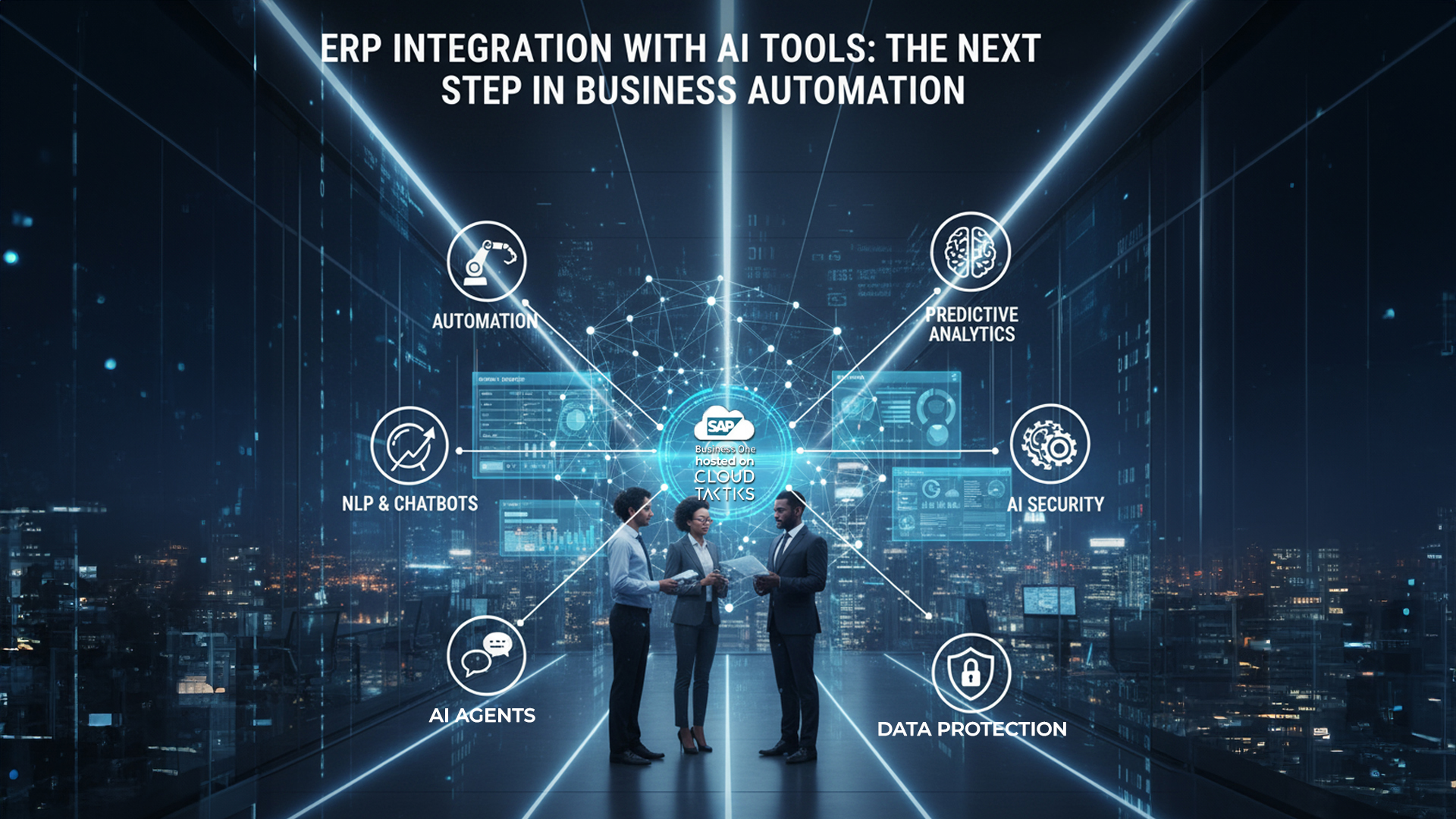
Artificial Intelligence is transforming the way businesses operate, and ERP systems are at the center of that evolution. Integrating AI tools with SAP Business One in the cloud turns your ERP from a system of record into a system of intelligence one that predicts outcomes, automates decisions, and continuously learns from your data.
AI integration starts with automation. Routine tasks such as invoice matching, expense approvals, and purchase order validation can now be handled by machine learning algorithms. This frees employees from repetitive work and reduces human error.
Next is predictive analytics. By analyzing historical data, AI models can forecast sales trends, demand fluctuations, and inventory needs. Managers no longer rely on guesswork they make data-driven decisions backed by real-time insights.
AI also enhances customer relationship management (CRM). Integrated tools can analyze communication patterns to predict churn, recommend upsells, and personalize marketing. For growing businesses in competitive markets like the UAE or Kenya, these insights translate directly into revenue.
Chatbots and natural language processing (NLP) tools improve user experience. Employees can ask the ERP system for information using simple queries “Show me this month’s top customers” and get instant, accurate answers.
From a technical standpoint, integrating AI into SAP B1 Cloud is easier than ever. APIs and cloud connectors allow seamless communication between ERP data and AI platforms like MyWave AI.
AI-driven ERP also improves security. Machine learning algorithms can detect unusual transactions or access patterns, alerting administrators to possible fraud or breaches.
As businesses embrace digital transformation, combining AI with ERP creates a strategic advantage. It turns data into action, reduces operational friction, and empowers smarter, faster decision-making. The future of ERP is not just connected it’s intelligent.


