
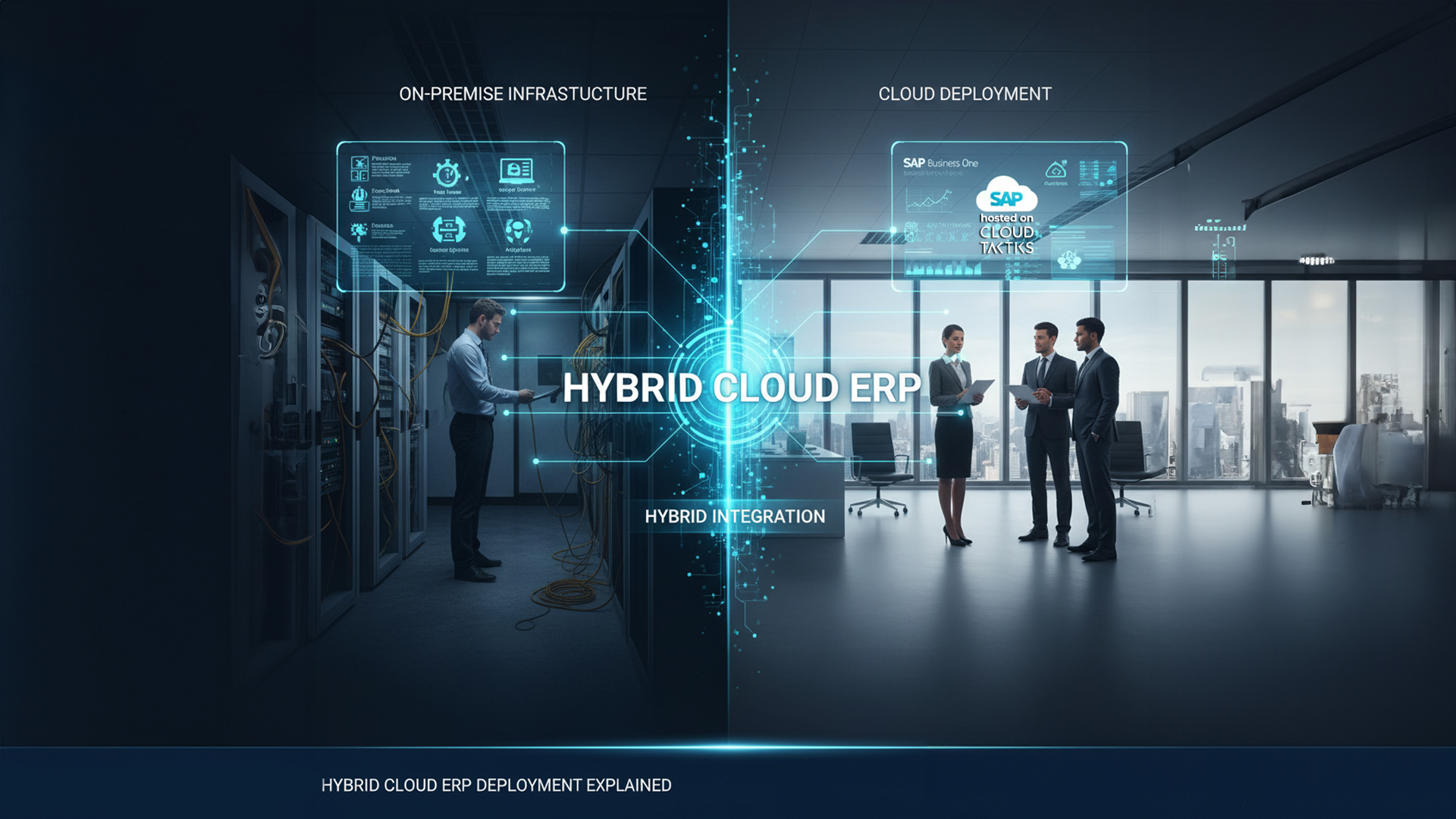
The term hybrid cloud has become a buzzword in IT, but for ERP systems like SAP Business One, it’s a practical solution that offers the best of both worlds: the control of on-premise infrastructure and the flexibility of cloud computing.
In a hybrid ERP setup, certain components such as databases or critical integrations remain on-premise, while others, like reporting tools or analytics, run in the cloud. This model allows businesses to modernize without fully abandoning their existing infrastructure.
Why choose hybrid? The answer is flexibility. Many organizations have legacy systems that can’t easily move to the cloud. A hybrid model enables gradual migration, reducing risk and minimizing downtime.
Another advantage is compliance. Some industries, like government and healthcare, require sensitive data to remain within local servers. Hybrid deployments let you keep critical data on-premise while leveraging the scalability of the cloud for non-sensitive operations.
From a performance perspective, hybrid ERP offers intelligent load balancing. Tasks that require heavy computation can run in the cloud, while latency-sensitive processes stay local. This ensures speed and efficiency across all operations.
Hybrid environments also strengthen disaster recovery. Cloud backups ensure business continuity even if on-premise servers fail. This redundancy minimizes risk and downtime.
Implementing a hybrid ERP solution requires careful integration planning. Data synchronization, API configuration, and consistent security policies are key to ensuring smooth operations between cloud and local systems.
For many growing businesses across Africa and the Middle East, hybrid ERP is the stepping stone toward full cloud adoption. It delivers modernization at a manageable pace while maintaining compliance and control.
In essence, hybrid ERP isn’t a compromise it’s a strategy. It gives businesses the agility of the cloud and the assurance of local control, preparing them for a fully digital future.


