
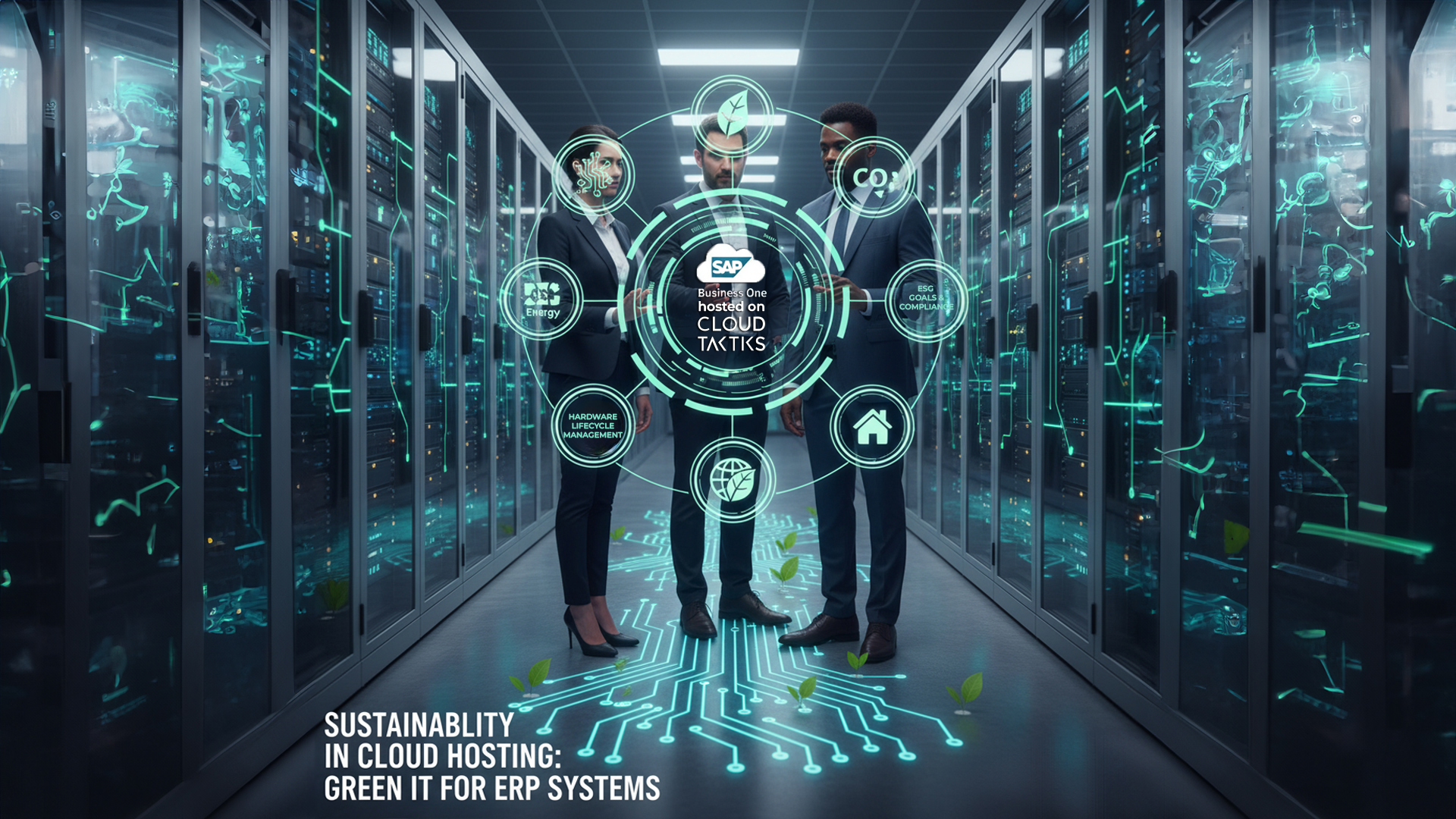
Sustainability has become a defining factor in business strategy, and IT operations are under increasing scrutiny for their environmental impact. Cloud ERP hosting particularly for platforms like SAP Business One offers a more sustainable alternative to traditional on-premise infrastructure.
Running servers in-house consumes significant energy for power and cooling. These systems often operate below capacity, wasting resources. Cloud data centers, by contrast, optimize workloads across virtual machines, achieving far greater efficiency.
Leading providers such as Microsoft Azure and Huawei have committed to carbon-neutral or even carbon-negative operations. They invest in renewable energy, efficient cooling technologies, and hardware recycling programs that dramatically reduce environmental footprints.
For businesses, migrating to the cloud supports corporate sustainability goals without compromising performance. It aligns with global ESG reporting standards and demonstrates responsible stewardship to investors and customers.
Cloud ERP also enables remote work, which indirectly reduces carbon emissions from commuting and office energy usage. The flexibility of accessing systems from anywhere makes sustainability both a practical and financial win.
Another key aspect is hardware lifecycle management. In cloud environments, hardware is centrally managed, refreshed, and recycled by the provider. This prevents electronic waste and ensures servers run at optimal energy efficiency.
For companies in regions like the Middle East and Africa, where sustainability initiatives are gaining traction, cloud adoption supports national green agendas and compliance with environmental regulations.
The future of business technology is both digital and sustainable. By hosting SAP Business One in the cloud, organizations reduce costs, emissions, and complexity proving that profitability and responsibility can go hand in hand.


